
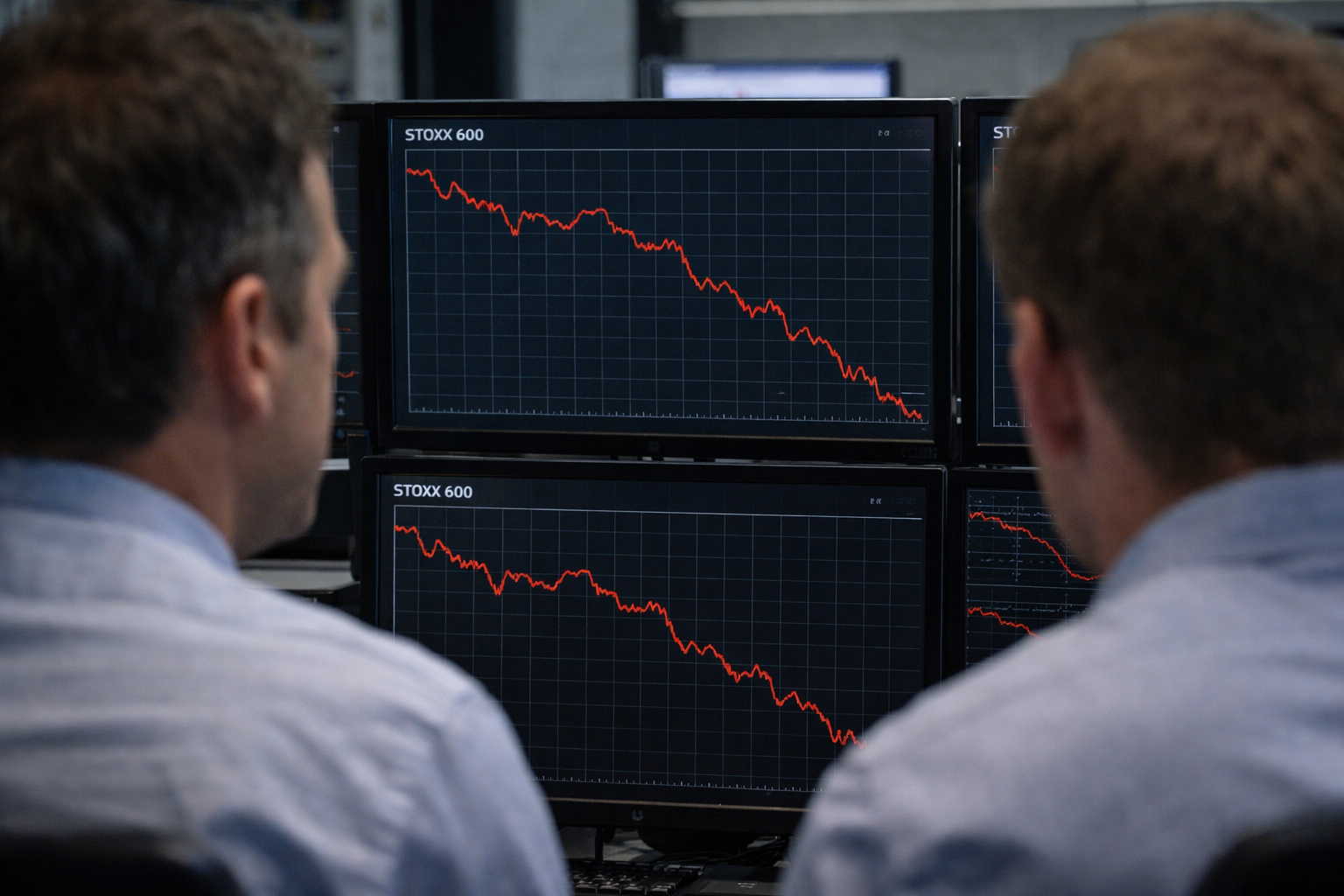
European shares fell sharply on Monday, with the pan-European STOXX 600 dropping 2.31% as investors reacted to escalating tensions between the United States and Iran, now entering a fourth week.
The latest decline leaves the index down around 10% from its recent closing high, putting it on track to enter technical correction territory if losses persist through the session.
The sell-off followed a steep decline in Asian markets earlier in the day, as concerns deepened over the potential economic fallout from disruptions in the Middle East, particularly around the Strait of Hormuz, a key global energy shipping route.
Why Trump’s threat is rattling investor sentiment
Over the weekend, Donald Trump warned that the United States could “obliterate” Iran’s power infrastructure if the Strait of Hormuz was not fully reopened within 48 hours.
Iran responded with its own escalation, threatening to target energy infrastructure and warning that entities financing the US military could be considered legitimate targets.
The rhetoric has heightened fears of prolonged disruption to global energy supplies, driving a surge in oil prices and reigniting inflation concerns across major economies.
“Up until yesterday, investors were unsettled by activities but hoped the US president would eventually back down,” said Russ Mould, investment director at AJ Bell.
“Trump telling Iran it had 48 hours to open Hormuz or the US would destroy its power plants is a complete U-turn from the president’s remarks last Friday that hinted at winding down military operations in the Middle East.
“Now the focus shifts to a more serious scenario where any destruction of vital infrastructure in the Middle East could cause major disruption to energy and food supplies on a wider scale, and a notable hit to economic growth with longer-lasting consequences,” Mould added.
Investors are now pricing in at least two 25-basis-point interest rate hikes by the European Central Bank this year, according to market data, a sharp shift from earlier expectations of no rate increases.
Sector losses led by airlines and miners
Losses were broad-based across sectors, with aerospace and defence stocks among the worst performers, falling 2.5%.
Airline shares came under pressure as jet fuel prices surged, raising concerns about profitability.
In the United States, United Airlines said it would cut unprofitable flights over the coming quarters in anticipation of sustained high fuel costs.
Mining stocks also declined, with the sector down 2.5% as prices of gold, silver and copper fell.
Companies such as Endeavour Mining and Hochschild Mining dropped more than 4%.
UK markets deepen losses amid energy shock
In the UK, the FTSE 100 fell 2.35%, hitting its lowest level since mid-December, while the more domestically focused FTSE 250 dropped 3%.
The decline came as rising oil prices pushed inflation expectations higher, while government borrowing costs surged, with the 10-year gilt yield climbing above 5% for the first time since the global financial crisis.
Richard Hunter, head of markets at Interactive Investor, said investor sentiment was deteriorating rapidly.
“The trickle is running the risk of becoming a flood as it becomes increasingly evident that the short conflict which investors had been pricing in remains totally elusive,” he said.
Hunter added that investors are running out of hiding places, with equities surrendering strong early-year gains, yields spiking higher, and even gold suffering a 7% decline given its inverse relationship with the dollar.
“Indeed, the strength of the dollar has negative implications for debt denominated in the currency – of particular interest to many Asian countries – while the oil price spike is not only inflationary but threatens to choke business investment and consumer confidence,” he said.
Policy concerns add to market volatility
The surge in energy prices has complicated the outlook for policymakers, particularly in the UK.
Susannah Streeter, chief investment strategist at Wealth Club, said the government faced difficult trade-offs as borrowing costs rise.
“The government is in a tight spot: its interest repayments on debt are already onerous, limiting the fiscal firepower that can be deployed to help households and firms deal with potentially crippling bills,” she said.
She added that spending priorities may need to be reassessed or taxes increased if pressures persist.
Among individual stocks, Spire Healthcare plunged 20% after announcing the end of takeover talks with private equity firms Bridgepoint and Triton.
The post European stocks drop as Trump threat fuels oil, inflation concerns appeared first on Invezz
